Second Number for Call & Text
- 4.3
- Rating
- 50.00M
- Installs
- Free
- Price

 Analysis by App-foxy
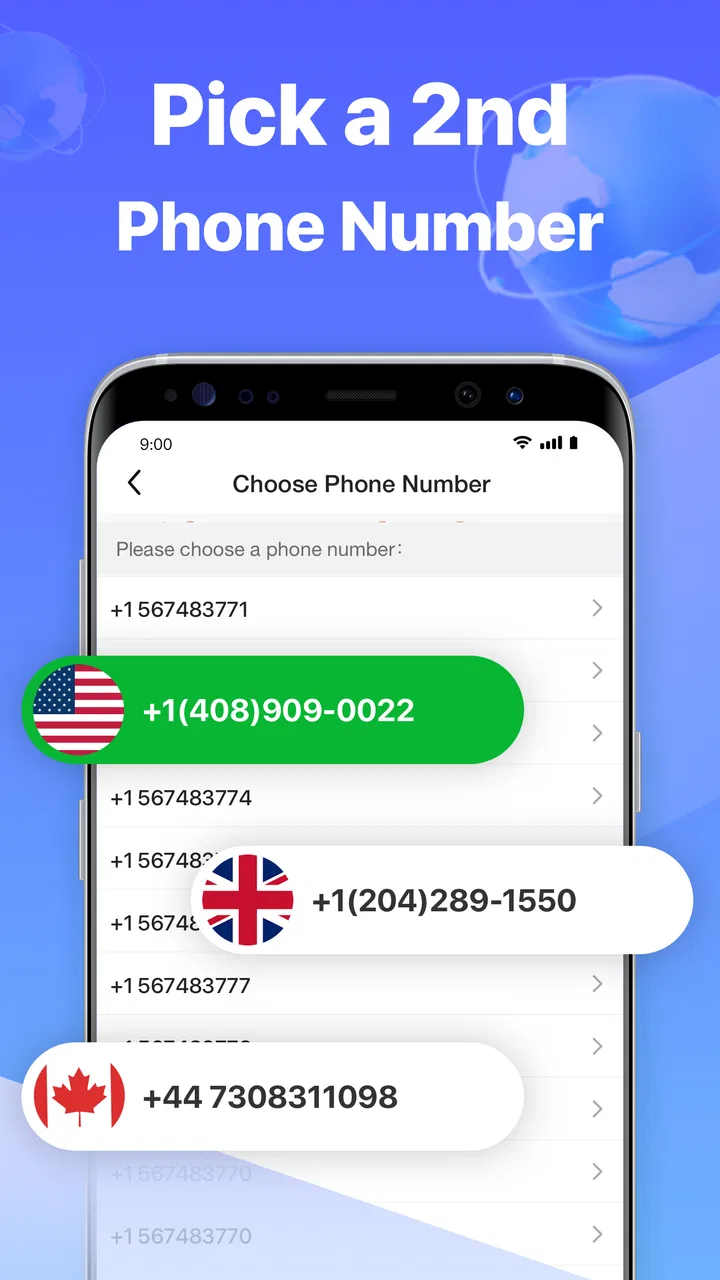
I tried Second Number for Call & Text as a practical way to separate personal communication from situations where I would rather not share my main number. It is a social app from Dingtone Phone, and its central idea is straightforward: give me another number for calls and texts without requiring me to carry a second phone. That simplicity is the reason to consider it, but it is also why I paid close attention to account controls, payment choices, and the moments when a second number can create more responsibility rather than less.
The app is free to install and is rated for Everyone, which makes it approachable for a wide range of users. It has been available since July 12, 2013, and the current Android release is version 6.4.9, supporting Android 7.0 and later. Its public reception is substantial: it holds a 4.3 average from around 677 thousand ratings, with more than 10 million installs. Those figures suggest that the basic concept has found a broad audience, although popularity alone is not a substitute for checking whether the service suits the way you plan to use a second number.
What I looked at before trusting a second number
A second-number app sits in a more sensitive part of the social category than an ordinary messaging tool. It can be used for everyday conversations, temporary contact details, selling something online, arranging appointments, or keeping work calls away from a personal line. At the same time, a phone number is often tied to identity, account recovery, and expectations of availability. I therefore judge this kind of app less by flashy extras and more by whether the user can understand what they are doing before making the number part of their routine.
You May Also Like

 AccuWeather: Weather Radar
AccuWeather Review: A Quick, Clear Forecast for Everyday Decisions
For everyday plans, the best forecast is the one you can understand quickly. AccuWeather makes rain timing, radar, and local conditions easy to act on, with a few trade-offs.

 Hill Climb Racing
Why Hill Climb Racing Still Turns Crashes Into One More Run
A tiny car, a bumpy hill and one more upgrade: Hill Climb Racing keeps resurfacing because its simple chaos makes every near-miss feel personal.

 AliExpress - Shopping App
AliExpress Makes Global Shopping Feel Personal, but Shoppers Bear the Risk
AliExpress turns a global marketplace into a pocket-sized discovery engine. Its reach is useful, its shopping loop compelling, and its trade-offs easy to miss.

 Lords Mobile: Kingdom Wars
Lords Mobile Is a Kingdom-Building Routine, Not a Quick Match
A case-by-case verdict on the building, battles, device demands, and social commitments that make Lords Mobile rewarding for some players and exhausting for others.

 PDF Scanner app - TapScanner
TapScanner Makes Paperwork Easier to Capture, Check, and Share
TapScanner makes scanning with a phone feel less like a rescue operation and more like a dependable step in getting work done. Its capture tools are useful, though not flawless.

 Block Blast!
 Shows How Much a Puzzle Game Can Leave Out
A quiet grid game shows why puzzle players increasingly value instant clarity, repeatable skill and low-pressure play—and where the genre still needs to catch up.
More From Our News Desk
View All News


My first practical test was to think about the boundary between the app and the phone itself. If I use a second number for a marketplace conversation, I want to know which messages belong to that separate identity and which belong to my normal phone account. If I use it for work, I want to be deliberate about when I check it. The value is not merely having another line; it is being able to keep two communication contexts apart without accidentally treating them as interchangeable.
That distinction makes the app more useful than simply creating another account on a familiar chat platform. Traditional messaging services often work best when both people already use the same service. A phone-number-based option is more flexible for contacts who expect ordinary calls or texts. On the other hand, a carrier-provided second line may be a better fit for someone who needs a dependable business identity, stronger network integration, or a number that remains part of a long-term mobile plan. I see this app as a convenience layer, not automatically as a replacement for a carrier line.
Where the separate number helps in real life
One scenario stood out to me. Imagine listing a desk online and receiving several messages from interested buyers. Using a separate number lets me handle those conversations without immediately exposing my everyday contact details. Once the desk is sold, I can stop using that communication channel instead of having those messages mixed into family, banking, and personal contacts. The important benefit is not secrecy; it is compartmentalization.
The same approach can help when joining a local class, coordinating a short project, or speaking with a service provider that may need to call but does not need my primary number. I would still avoid treating the number as disposable in situations involving legal notices, financial accounts, medical care, or anything where reliable long-term access matters. A second number is useful only when I understand the consequences of making it the contact point.
For people who travel, the appeal may be different. A separate number can keep communication organized while away from home, but the experience will depend on the surrounding network and the way the recipient expects to contact me. I would test calls and texts with a trusted person before relying on it for a time-sensitive arrangement. That small trial is more valuable than assuming that every phone-number service behaves exactly like a normal carrier connection.
Controls that deserve attention before regular use
I recommend treating the initial setup as a privacy decision rather than rushing through it. Read each visible prompt, check which account is being used, and notice whether the app presents optional purchases separately from the basic service. Dingtone Phone offers in-app purchases ranging from $0.99 to $59.99 per item, so the free entry point should not be confused with every possible use being cost-free. I would make sure the payment confirmation is clear before selecting anything that could charge the account.
This is especially important if a child or shared-device user might access the app. The Everyone rating describes the content level, but it does not remove the need for household rules around calls, messages, contacts, and purchases. On a shared phone, I would use the device’s purchase protections and make sure the person using the second number understands that conversations still involve real people and real privacy expectations.
I also found it useful to decide in advance what the number is for. A narrow purpose makes the controls easier to manage. “Messages for a temporary sale” is clearer than “another number for everything.” “Calls from project contacts during a defined period” is easier to review than allowing the second line to become an unfiltered duplicate of the main phone. This kind of personal rule is a genuine safeguard because it limits the amount of sensitive communication that accumulates in one place.
Before sharing the number widely, I would send a test text and place a test call with someone I know. I would check how incoming communication appears, whether notifications are easy to distinguish from my primary line, and whether I can tell at a glance which identity I am using. That workflow catches the most annoying mistake early: replying from the wrong number or assuming a message was handled when it was actually sitting in a different inbox.
Data-sensitive moments are more important than the download screen
The most sensitive moment is not necessarily installation. It is the first time I use the number with a stranger, a business, or a service that may retain contact information. I would avoid putting unnecessary personal details into a message and would not send identification documents, payment information, or private account codes simply because the conversation is happening through a separate number. A second number reduces exposure of my main contact detail, but it does not make the conversation itself risk-free.
Verification messages deserve particular care. Some services allow phone numbers to be used for sign-in or recovery, while others reject numbers that are not treated like standard mobile lines. I would never assume that this app’s number is suitable for a critical account until that service clearly accepts it and I have a reliable recovery method. For low-stakes communication, experimentation is reasonable; for an account that protects money, identity, or essential access, I would choose the provider’s recommended recovery option instead.
There is also a social risk in using a second number without explaining the context. A contact may reasonably wonder why the number is different or may save both numbers under the same name. If I use the app for work or a short-term project, I would state what the number is for and what response time to expect. Clear expectations prevent the separate line from becoming a source of missed calls, repeated follow-ups, or accidental over-sharing.
Notifications can be a quiet privacy issue. A message preview appearing on a lock screen may reveal the purpose of the second number to anyone nearby. I would review the phone’s notification settings and decide whether previews are appropriate. This is not a special claim about the app; it is a practical reminder that privacy depends on the whole device, not only the application’s interface.
How much control the user really has
The strongest user choice is deciding whether to keep the second number narrowly focused. I would periodically review who has received it, which conversations still matter, and whether the number has started attracting unwanted contact. If its purpose has ended, I would stop distributing it rather than continuing to treat it as a permanent public identity. That habit is more effective than collecting several numbers without a plan.
I would also separate communication decisions from payment decisions. The app can be free to start, but the presence of optional purchases means I would not add credit or select a paid item merely to solve a momentary inconvenience. First I would ask whether the conversation is important enough to justify the cost, whether a normal messaging service would work, and whether a carrier line would be more suitable for repeated use. This keeps the second number from becoming an automatic expense.
Account access matters as well. I would use a sign-in method I can maintain, keep recovery details current, and avoid building an essential workflow around a number that I may later abandon. If the app becomes a regular part of my communication, I would document which contacts depend on it. That simple list makes it easier to update people if my plans change and reduces the chance of being locked into a number merely because I forgot where it was used.
For families, the user-agency question is broader. A parent may appreciate a separate number for a teenager’s club activity or a temporary group, but the young user still needs guidance about unknown callers, personal information, and unwanted messages. The Everyone rating makes the app broadly accessible, yet responsible use still depends on supervision and clear boundaries. I would not hand over a second number as if it were automatically safer than a primary one.
Where it beats ordinary alternatives, and where it does not
Compared with using a personal number everywhere, the app offers a cleaner dividing line. I can give one contact detail to a short-term activity and keep my main line reserved for people and services I trust more. Compared with a standard chat app, it is better suited to contacts who expect phone calls or SMS rather than another account on a specific platform.
Compared with a second carrier line, the trade-off is convenience versus infrastructure. A carrier line may be preferable for someone who needs consistent integration with the phone dialer, a long-term professional identity, or dependable access under a mobile plan. I would also favor the carrier option when the number is central to customer support, emergency coordination, or account recovery. The app makes more sense when flexibility and separation matter more than having a fully established second mobile service.
Compared with disposable communication services, I would choose carefully rather than assuming that temporary means anonymous or consequence-free. A number can still be connected to conversations, accounts, and people who remember it. The responsible use case is a controlled boundary, not an excuse to ignore consent or platform rules. That is why I prefer a clearly defined purpose and a planned end point.
Who should use it and who should skip it
I think it is a good match for someone who wants a separate contact channel for classified listings, short projects, community activities, or casual calls and texts. It is also worth considering for a person who wants to test a second communication identity before committing to the recurring complexity of another carrier line. The free starting point lowers the barrier to trying that workflow, provided the user pays attention to optional purchases.
I would skip it as a primary business phone if missed communication would have serious consequences. I would also avoid relying on it as the sole recovery route for important accounts, or as the only number for medical, financial, legal, or emergency matters. People who dislike managing another inbox may find that the extra separation creates more work than value. In that case, a carrier feature or a familiar messaging service may be simpler.
Users who need a number for a very short task should still think about what happens afterward. Before sharing it, decide how long it should remain active in your routine, where it will be recorded, and how you will handle contacts that continue to call. That planning is one of the less obvious trade-offs: a second number can reduce exposure at the beginning while creating maintenance work later.
My cautious verdict after using the concept in practice
Second Number for Call & Text is most convincing when I treat it as a boundary-setting tool. It gives me a way to keep a personal number away from selected conversations, while still using calls and texts that feel familiar to the people contacting me. The app’s long availability, broad install base, and 4.3 average make it a credible option to investigate, but I would still make decisions based on my own communication needs rather than on popularity.
My recommendation is to start with a low-risk, clearly defined use case. Install it on a supported Android device, review the visible choices during setup, test the number with a trusted contact, and keep paid options deliberate. Do not place essential account recovery, sensitive documents, or emergency communication on it until you have independently established that it fits that purpose.
The best reason to use this app is controlled separation, not blind replacement of your main phone service. If you want a practical second channel for ordinary calls and texts and are willing to manage it thoughtfully, it can be useful. If you need guaranteed long-term infrastructure or cannot tolerate uncertainty around an essential number, I would choose a carrier-based alternative instead.
FAQs for Second Number for Call & Text
01What is Second Number for Call & Text and how does it work?
Second Number for Call & Text is an app that allows users to create a secondary phone number on their existing device. This can be used for calls, texts, and voicemails without the need for a new SIM card. The app uses your internet connection to facilitate communication, making it a convenient option for personal or business use.
02Is my personal information secure when using Second Number for Call & Text?
Yes, the app prioritizes user privacy and security. It employs encryption to protect your calls and messages. Additionally, your personal number is not visible when using the secondary number. Always review the app’s privacy policy to understand how your data is handled.
03Can I use Second Number for Call & Text for international calling and texting?
Yes, the app supports international calling and texting. However, additional charges may apply depending on the destination and your subscription plan. It's advisable to check the app's pricing details for specific rates on international usage to avoid unexpected charges.
04What features are included in Second Number for Call & Text?
The app offers a variety of features, including call forwarding, voicemail, and customizable voicemail greetings. It also allows you to block unwanted calls and texts, set custom ringtones, and manage multiple numbers if needed. These features make it versatile for different user needs.
05Are there any subscription fees or in-app purchases involved?
Yes, Second Number for Call & Text typically requires a subscription for full access to its features. There might be a free trial period available, but ongoing use will involve a fee. In-app purchases may also be available for additional features or credits, so it’s important to review the pricing details before committing.
Pros
- Easy setup and user-friendly interface.
- Affordable pricing for extra numbers.
- Supports international calls and texts.
- Customizable voicemail options.
- Works smoothly on both Android and iOS.
Cons
- Limited free trial features.
- Occasional call quality issues.
- Requires stable internet connection.
- Ads can be intrusive at times.
- No option for video calls.

Second Number for Call & Text
Gallery